Wednesday, August 29, 2007

Nokia N81


YAY!!! Nokia have brought out a new phone! Who would have thought?
Not just any phone though, a Multimedia device that lets you "live in the internet". Nokia have also launched OVI, meaning "door" in Finnish. Nokia are hoping that we will open the door for them and create a whole new internet world.
We will be able to buy "all the music in all the world", they say. I cannot wait to see what the South African music industry will have to say to that.

Games are on the way too. Costing between 6 and 10 Euros, which in my book is not cheap, but who am I to judge this one, kids of today are the gamers and daddy has more money thatn you and I will ever have.


On the right of this post is the new Nokia N81. VERY PRETTY, all say ooooohhhh.
8GB of onboard memory, new graphic interface and touchy feely buttons. Nokia are promising touch screen soon, do we really need that?
All will be revealed from October!

Wednesday, August 01, 2007

Censorship is alive and well in South African Companies


South African companies are beginning to follow their international counterparts in blocking workers' access to popular social networking site Facebook.

They cite concerns over productivity -- but some experts defend the site, saying it holds huge potential as a business tool.

Standard Bank is among those who have moved to include it on its list of the company's blocked leisure sites to prevent people spending non-productive time on non-work related issues, said bank spokesman Erik Larson.

And, according to Absa, the banking group has done the same although it will consider access based on individual requests.

"We don't see any business need for Absa staff to access the site," said a spokesman.

"Under certain circumstances we do grant permission to have access, but look at each case on merit so they are not totally cut off."

Facebook users also report that Wesbank and a number of smaller companies are following this trend.

According to the site's own research, its 31 million active users spend an average of 20 minutes a day interacting with their "friends".

But, most newcomers to the phenomenon, which has at least 170,000 users on the South African network, say they are addicted and spend far more than that interacting with their "friends" locally and globally

Website traffic monitor www.alexa.com ranks Facebook as the second most visited website in South Africa, next to Google, and Facebook ranks South Africa in the top 10 user countries.

"I can completely understand why they are restricting access to Facebook and Youtube (a video sharing site, also popular)," said Alan Levin, chairman of the Internet Society of SA.

"They can be incredibly addictive and in 99 percent of cases it is not productive. Corporate companies are grappling with the decision (to block it)."

The impact on infrastructure could be established by determining which business model a company has chosen -- whether they have a constrained pipeline or a system capable of handling higher traffic volumes.

But, said Levin, Facebook forms part of the global knowledge economy, and compnies are beginning to recognise and explore the possibilities beyond the purely social, for their own uses, as well as the potential it holds for research and development.

The site gives users a chance to list their likes, dislikes, interests, religious and political beliefs, schools, colleges, workplace and profession, as well as birthdate and hometown.

A keyword search for "journalism" for example, will bring up a list of all Facebook members who have included journalism in their profile details.

The user can then opt to ask someone to become their "friend".

This can be accepted or denied by the targeted friend and if accepted, they are listed on a group of friends with an accompanying picture -- and can communicate with each other on their common interest.

It began as a social network within the US's Harvard university, accessed through a student number, and has been rolled out gradually internationally.

Users can reconnect with long-lost friends already on the network by joining existing groups -- like an old school group -- or create groups where they interact with people with the same interests by writing on a "wall" or through private messaging.

People selected as friends can also see each other's personal details and wall posts, although privacy settings can fine tune that.

Users can also use or create a group and invite others to join. These range from ex-university pals and support groups, to quirkier groups like the local "Harry Pather and the Order from Phoenix" or "I don't care how comfortable Crocs are, you look like a dumbass".

"There is such a big market -- Facebook's target market is 18 and 35 --and this market is highly desirable. These issues have to be weighed up," said Levin.

Eric Edelstein, who runs an affiliate networking company www.trafficsynergy.com said: "It can hamper productivity, but, it is also a fantastic marketing tool."

He related a story of how he had tried unsuccessfully to make contact with a potential business partner in the US. As a last resort, he searched for the person's name on Facebook and sent them an instant message.

"Within five minutes he replied," said Edelstein. "It allows you to find the right person in a company very quickly. A lot of people are now using Facebook as a means of contacting people for the workplace."

He added that when he is about to meet a new business partner, he looks them up on Facebook and reads their profile to prepare for the meeting.

He also enthused about the possibilities the Facebook data base holds for companies, and the way the site allows outside users to add their own applications.

One of these has just been launched by local company Fontera which, through an application called Nudgemii, allows Facebook users to send free SMS messages to their friends all over the world.

Steven Ambrose, who heads the strategy division of technology researchers World Wide Worx, likens Facebook to the village fountain where people gathered to chat.

"It's taken off like crazy in South Africa," said Steven Ambrose, who heads the strategy division of technology research company World Wide Worx.

"It's in everybody's face."

Although its function is still mainly social, companies are making a lot of contacts and getting a lot of information from it.

"Companies are establishing a presence on Facebook which makes it quite compelling -- it's all part of the new interaction on the web," said Ambrose.

Regarding productivity, he points out that this needs to be compared with other time-consuming work-time activities like smoke breaks.

The biggest impact is bound to be on the company's bandwidth but, if users are just chatting, the impact should be minimal.

However, loading videos and songs could have a huge impact. It would certainly help chew up the limited bandwidth available for home use.

As with all networking sites, privacy is an issue and concerns have already been raised about possible risks to minor's safety.

"Young and vulnerable people shouldn't have totally uncontrolled access to the web," advised Ambrose.

Meanwhile, a quick search reveals that my deputy editor is on Facebook --mmm better quickly check my wall posts...

Monday, April 02, 2007

IBURST GIVES VOIP THE THUMBS UP

Affordable voice communication in South Africa today received a boost with the launch of iCall, a Voice over Internet Protocol (VoIP) service from iBurst.

iCall enables iBurst subscribers to make calls at competitive rates to any cellphone or landline in the world using their modems and VoIP devices which can be purchased from iBurst.

Compared to using a traditional fixed line phone, iCall subscribers will save 17% on calls to South African cellphones, 15% on national calls and in excess of 70% to many international destinations. With iCall, it is cheaper to call a landline number in Australia, China, the UK, USA and most of Europe than it is to call Cape Town from Johannesburg from a traditional landline.

The wireless broadband provider is emerging as a surprise player in the VoIP market. Already, iBurst is the only wireless broadband provider not to penalize subscribers who make VoIP calls across their networks.

“iBurst doesn’t have any traditional voice revenue to cannibalize so we’re quite happy to encourage the adoption of VoIP,” said Thami Mtshali, CEO of iBurst.

The deregulation of the telecommunications industry announced by Communications Minister Ivy Matsepe-Casaburri in September 2004 means that dozens of ISPs are beginning to take advantage of this cost-saving technology.

“VoIP allows individuals and organisations in particular to direct their savings towards priority areas,” added Mtshali.

Upon iCall signup, subscribers will be allocated an iCall number. The process is password-protected to verify calls being made and ensure accurate billing. The applicable rate for the destination and the duration of the call will determine how the subscriber's voucher is depleted.

Strict security protocols will ensure that calls are only made with the allocated username and password issued during signup. Subscribers are required to pay a subscription fee of R50 per month including VAT after which pre-paid vouchers need to be purchased as an additional top-up option for using the service. These are currently available in R100 and R200 denominations. The subscription allows for unlimited free calls between iCall subscribers which is ideal for inter-branch communication, amongst other uses.

An itemised bill will be mailed to subscribers electronically ensuring that they are aware of their monthly usage. iBurst also offers telephonic and e-mail support to ensure that all queries are dealt with quickly and efficiently.

Interested parties are invited to signup for their iCall service using http://www.iburst.co.za/, where they will also be able to access the applicable rates, terms and conditions along with further information.

iBurst’s wireless broadband service, which will cost as little as 12 cents a megabyte from 1 April, is up to three times faster than 3G and 17 times faster than dial-up. iBurst’s most affordable package from April is “Play Intro” offering 200 megabytes of data at R149 per month.

iBurst continues to lead the way by offering unrestricted VOIP, data-carryover, month-to-month contracts and great customer service.

For further information regarding iBurst products, the company's call centre can be reached 24 hours a day either via telephone (0860 IBURST or 0860 428 778) or email (sales@iburstgroup.co.za).

Tuesday, March 13, 2007

EA SPORTS FIGHT NIGHT ROUND 3 GETTING READY TO PACK A PUNCH ON MOBILES


Electronic Arts announced today the launch of EA SPORTS™ Fight Night Round 3. The critically acclaimed boxing game franchise will become available for download from April 2007 allowing mobile fans to be able to build and customize their boxer’s look and fighting style and fight their way from no name contender to champion of the world.

EA SPORTS™ Fight Night Round 3 is an action-packed mobile game for diehard and casual boxing fans alike and is the closest thing to being in the ring without actually getting punched! Featuring ten of the most famous and notorious boxers of all time, gamers can take on the ring style of champions from Ricky Hatton to Oscar de la Hoya whilst enjoying breathtaking graphics, up to five different fighting venues, and an opportunity to create and design their own boxer to use in the ring.

From the pre-fight press conference and weigh-in to fitness and skills training, EA SPORTS™ Fight Night Round 3 ensures no boxing fan is ever left outside the ring. The gameplay has been especially adapted for mobile and features a high-risk, high-reward punch system where gamers will put down their opponent or go down for the count. Jabs, hooks, haymakers, special moves, combos, counters and knock downs add to the fierce action. EA SPORTS™ Fight Night Round 3 is quite simply the most realistic and graphically impressive boxing game available on mobile.

“The Fight Night franchise has been hugely successful for EA SPORTS™ and we’re delighted to be able to bring the passion and drama to mobile gamers across Europe – we’re certain it will be a knock-out!” said Javier Ferreira, VP European Publishing, EA Mobile.

To learn more on EA SPORTS™ Fight Night Round 3 please go to www.eamobile.com

VIA Launches Most Powerful, Most Efficient and Most Media-Rich Nano-ITX Mainboard


Next generation VIA EPIA NX first to feature the power efficient 1.5GHz VIA C7 processor, or the 1.2GHz VIA Eden for the fastest fanless Nano-ITX, plus the VIA CX700M2 system media processor for the richest visual experience

Taipei, Taiwan, 13 March 2007 - VIA Technologies, Inc, a leading innovator and developer of PC platform solutions, today introduced the 12cmx12cm VIA EPIA NX-series mainboard, the highest performance, most power efficient and feature-rich Nano-ITX platform ever.

Designed for ultra compact embedded systems with demanding digital media requirements, such as slimline LCD PCs and digital signage, small yet powerful set top boxes and next generation car PCs, the VIA EPIA NX takes the Nano-ITX mainboard to the next level, boasting the latest generation VIA processors based on the ‘Esther’ core offering the VIA V4 bus, highly effective power management and the world’s most advanced hardware security.

Available with the 1.5GHz VIA C7 processor, or the 1.2GHz VIA Eden processor for the fastest fanless configuration, the VIA EPIA NX offers a host of advanced multimedia features through the VIA CX700M2 system media processor. This all-in-one digital media IGP chipset integrates the VIA UniChrome Pro II 2D/3D graphics core and an extensive array of high end audio and video technologies, including Vinyl Multi-channel HD audio, hardware MPEG-2/-4 and WMV9 video decoding acceleration, and a built-in HDTV encoder up to 1080i for the richest entertainment experience.

“Better multimedia within increasingly smaller, slimmer packages is clearly the main trend in consumer information and entertainment systems, and defined the design of this latest generation Nano-ITX mainboard,” said Daniel Wu, Assistant Vice President, VIA Platform Solutions Division, VIA Technologies, Inc. “The powerful, feature-rich EPIA NX will help fulfill the Nano-ITX ‘New Vision’ by enabling quieter, more space-saving and reliable embedded systems, further promoting the adoption of the x86 platform in everyday systems.”

The VIA EPIA NX-series Nano-ITX mainboard will be on display at the PressExpoUSA press event on Friday 16 March at the Messe Convention Centre during CeBIT 2007; learn more about this event at: www.via.com.tw/en/company/events/cebit2007/index.jsp.

About the VIA EPIA NX-Series Nano-ITX Mainboard

Measuring just 12cm x 12cm, the powerful, feature-rich yet highly power efficient VIA EPIA NX Nano-ITX mainboard is available with either the 1.5GHz VIA C7 processor or fanless 1.2GHz VIA Eden processor supporting the 400MHz VIA V4 bus and integrating the VIA PadLock Security Engine, combined with the VIA CX700M2 advanced system media processor with its support for a wide range of digital media technologies and I/O appropriate for the consumer electronics market.

The VIA CX700M2 system media processor features the VIA UniChrome Pro II 2D/3D graphics core, and boasts the VIA Chromotion CE video display engine, including an integrated HDTV encoder that utilizes an advanced ASIC with VIA’s Advance ProScale® Technology to scale the input resolution for 640x480 up to 1024x768 encode for 1080i, 720p standard HDTV resolution output, as well as hardware decoding acceleration of MPEG-2/-4 and WMV9 video. The latest high definition audio is supported through VIA Vinyl 8-channel HD audio, and a rich range of display options includes an integrated LVDS connector plus a DVO pin connector for an additional LVDS panel through an appropriate daughterboard, plus a TV-out connector for S-Video, Component and Composite display outputs for unparalleled flexibility.

The VIA EPIA NX Nano-ITX mainboard has two Serial ATA connectors for full featured native SATA II RAID 0, 1, 0+1, configured using the VIA DriveStation SATA RAID with the VIA CX700M2, an Ethernet port for seamless broadband connectivity with the optional upgrade of Gigabit Ethernet, and supports up to 1GB of DDR2 400/533MHz SO-DIMM memory.

More details about the VIA EPIA NX-series Nano-ITX mainboard may be found on the VIA website at:

http://www.via.com.tw/en/products/mainboards/motherboards.jsp?motherboard_id=470 while information on the VIA CX700M2 system media processor can be found here:

http://www.via.com.tw/en/products/chipsets/c-series/cx700m/

VIA EPIA NX-series Nano-ITX Availability

The VIA EPIA NX-Series Nano-ITX mainboard is available now for developers, and will be available through authorized distributors shortly. For pricing and availability, please contact your local VIA sales representative or send an email to: embedded@via.com.tw.

Monday, March 05, 2007

The Local War has Started


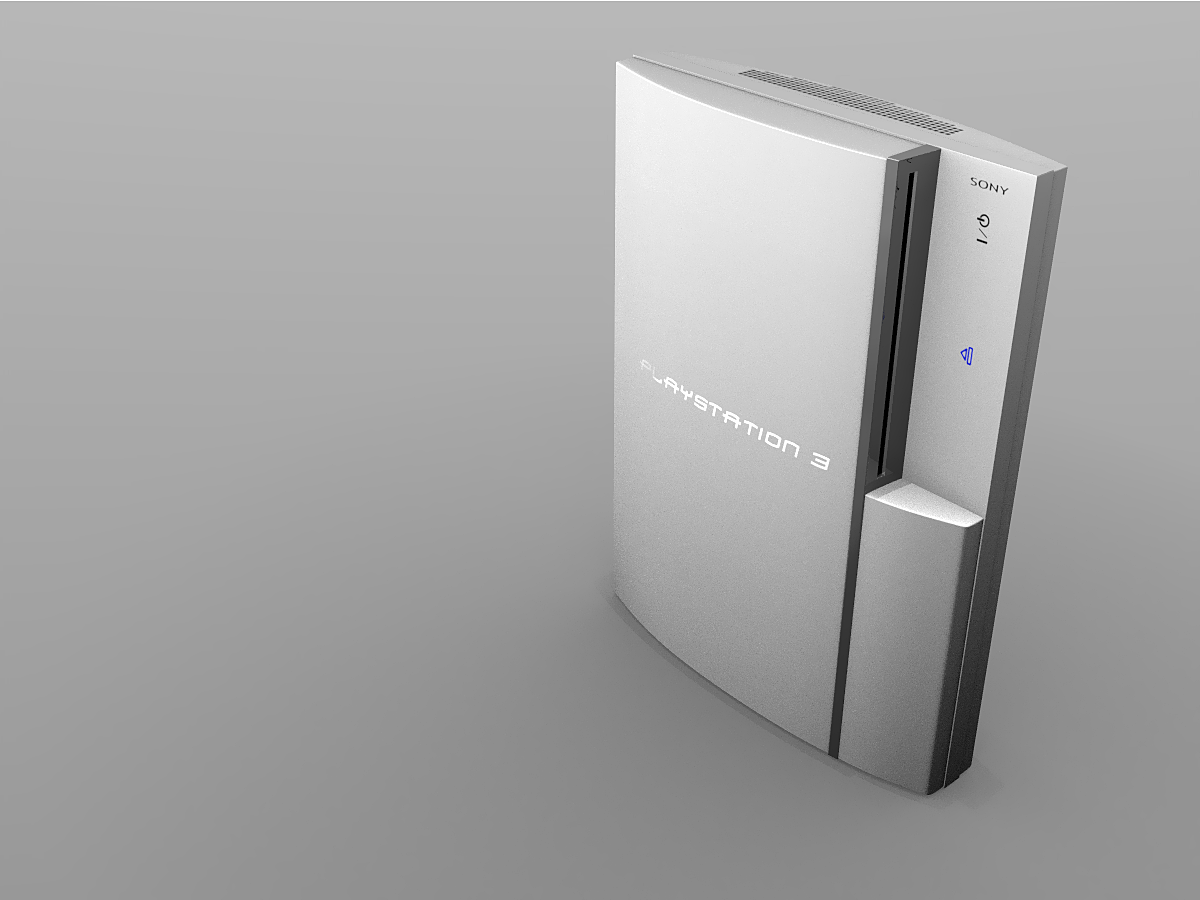
As you see in the article below this one, the PS3 gets launched in South Africa on 23 March. That is just a few days away now. On the 14th of March, the people that bring out the XBox here in South Africa are having a press function. Perfectly placed, 9 days before the launch of thier biggest opposition here in South Africa, what do you expect Microsoft to be doing on the 14th?

If they are lucky, thier press function and news will come out at the same time as the PS3 launch news, maybe just a little before. I am imagining that the news will be the launch of XBox Live which, until now, has not been avaialable to people with South African addresses.

The PS3 has some sort of wireless network and I am sure, is able to connect to the WWW without too much of a fuss. Until now, the XBox has not been able to do that.

The war is on.

Or is it?

At Look & Listen last night, I saw the price of the PS3! Are they insane? R6000 for a console that can play DVD's that aren't in South Africa yet? I think not!

Tuesday, February 27, 2007

Official Specs for PS3 in South Africa


Sony announced last week that PLAYSTATION®3 (PS3™) to be launched in the PAL territories, which includes South Africa, on 23 March 2007 would utilise a new hardware specification.

The local PS3 will feature the Cell Broadband Engine™, 60 GB hard disc drive, Blu-ray Disc player, built-in Wi-Fi connectivity and SIXAXIS™ wireless controller. It also embodies a new combination of hardware and software emulation which will enable PS3 to be compatible with a broad range of original PlayStation®(PS) titles and a limited range of PlayStation®2 (PS2) titles.

“PS3 is first and foremost a system that excels in playing games specifically designed to exploit the power and potential of the PS3 system,” said David Reeves, President of SCEE. “Games designed for PS3 offer incredible graphics quality, stunning gameplay and massively improved audio and video fidelity that is simply not achievable with PS and PS2 games. Rather than concentrate on PS2 backwards compatibility, in the future, company resources will be increasingly focused on developing new games and entertainment features exclusively for PS3, truly taking advantage of this exciting technology.”

Some additional PS2 titles will become compatible on the PS3 system through regular downloadable firmware updates, which will be made available through the PLAYSTATION®Network, from www.playstation.com or via PS3 game discs, with the first update planned for the launch date of the 23rd March 2006.

Users will be able to check whether their titles are compatible with PS3 at http://faq.eu.playstation.com/bc. This site will be available on 23rd March to meet launch day.